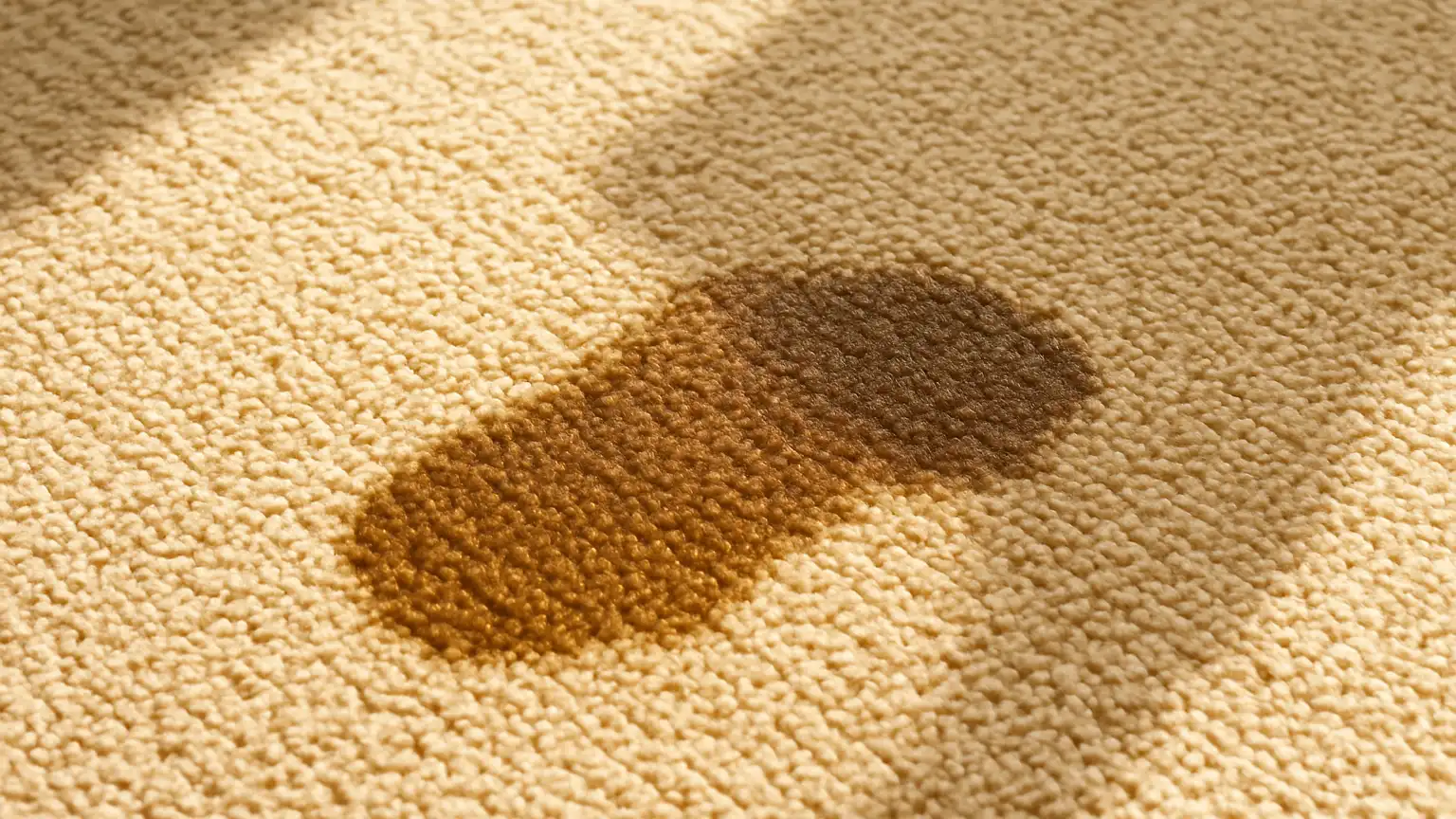
Dish soap feels like a safe fix, but it leaves a sticky film that pulls in dust. That is why so many people quit using it once they learn what soap residue does to carpet. So what should you grab instead? It depends on the type of stain in front of you.
Much of the thinking here was shaped by Mr Clean Carpet Care, a Scottsdale team whose daily work on Arizona carpet points to one big idea: stains come in two families, and each family needs its own tool.
Those two families make more sense once you see how Arizona's hard water, heat and dust change the way any cleaner behaves. Understanding the chemistry working in your carpet shows why one product can lift one spot and lock in another.
Two Stain Families, Two Different Tools
Picture every stain as either "food" or "color." Food stains are made of protein, starch, and other organic matter. Color stains are made of dyes and tannins that tint the fiber.
- Food family: pet urine, vomit, blood, milk, egg, sweat, and gravy
- Color family: coffee, tea, juice, cola, and sports drinks
- Both at once: red wine, ketchup, and pasta sauce
An enzyme cleaner works like a crew of tiny workers that eat the food family. Each enzyme targets one kind of matter. Protease breaks down protein, amylase breaks down starch, and lipase breaks down fats, leaving small pieces that water can carry away.
An oxidizer, such as hydrogen peroxide or an oxygen-based powder, breaks the chemical bonds that make a color visible. Tiny traces may remain, but your eye can no longer see them.
Mixed stains need a plan. If you need to get red wine out, first pull up as much liquid as you can. Then treat the sugar and the dye as two separate jobs.
The Clock Runs Faster in Arizona
In a humid state, a spill can stay damp for hours. In Phoenix, Mesa, or Scottsdale, dry air can wick it out in minutes, pulling the stain down into the fiber and the backing. A sunny window or a warm floor speeds this up even more.
Protein stains also react to heat. Just as an egg white turns solid in the pan and never goes back, blood, milk, and urine set when they get hot. That is why pouring hot water on a pet accident is one of the worst moves you can make.
Color stains set in their own way. Tannins in coffee and tea bond to nylon over time, and after a day or two, even a strong oxidizer may only lighten the spot.
What Happens When You Pick the Wrong One
Oxidizer on a Food Stain
Peroxide may lighten a urine spot, but it leaves the protein and salts behind, so the smell stays. Worse, if you use an oxidizer first, it can kill the enzymes you add later, since enzymes are proteins too.
Enzyme on a Color Stain
Enzymes have nothing to eat in a dye stain. You lose time while the coffee keeps bonding, and by the time you switch tools, the spot may be locked in.
"Most of the stains we can't fully remove were treated twice with the wrong product before anyone called us," says Daniel Ortiz, lead technician at Mr. Clean Carpet. "Getting it right the first time matters more than scrubbing hard."
Watch Your Fiber Type
Wool and silk are protein fibers. A strong protease enzyme can weaken them, and peroxide can bleach or yellow them. The pH lessons in how hard water yellows carpet apply here too, so always test a hidden spot first.
Pet owners face this choice most often. If you want to protect carpet from dog urine over the long run, keep a true enzyme cleaner on hand and skip the peroxide for those spots.
A Simple Field Guide for Fresh Stains
Speed beats strength. Follow these steps in order:
- Blot, don't rub. Press a white towel down hard and lift. Rubbing spreads the stain and frays the fiber tips.
- Use cool water only. A light mist keeps the spill loose without cooking proteins.
- Name the family. Did this come from a body or a plate, or is it mostly color? Dry pigments are their own case, so if you need to get powder makeup out, lift the loose particles before any liquid touches them.
- Food stain: apply an enzyme cleaner, cover it with plastic wrap so it stays damp, and give it 15 to 30 minutes.
- Color stain: test a 3 percent hydrogen peroxide or oxygen cleaner on a hidden spot, then dab it on lightly.
- Mixed stain: enzyme first, rinse, then oxidizer. Never the other way around.
Why the Rinse Step Is Not Optional
Every spotter leaves something behind. Enzyme products carry their own soil and broken-down bits, and oxidizers can leave salts. Skip the rinse, and that leftover can grab dirt and form a dark ring.
A brown halo that shows up a day later is often a sign of wicking, as deep soil rises to the top while the spot dries. The same steps used for removing water stains from carpet help here: rinse with plain water, blot dry, and set a folded towel with a heavy book on top overnight.
Rinsing well also ties into the bigger issue of carpet residue and re-soiling, which explains why some spots come back again and again. The team at Mr Clean Carpet Care often stresses that a clean spot with residue left in it is only clean for a week.
The Stain Clock Is Always Running
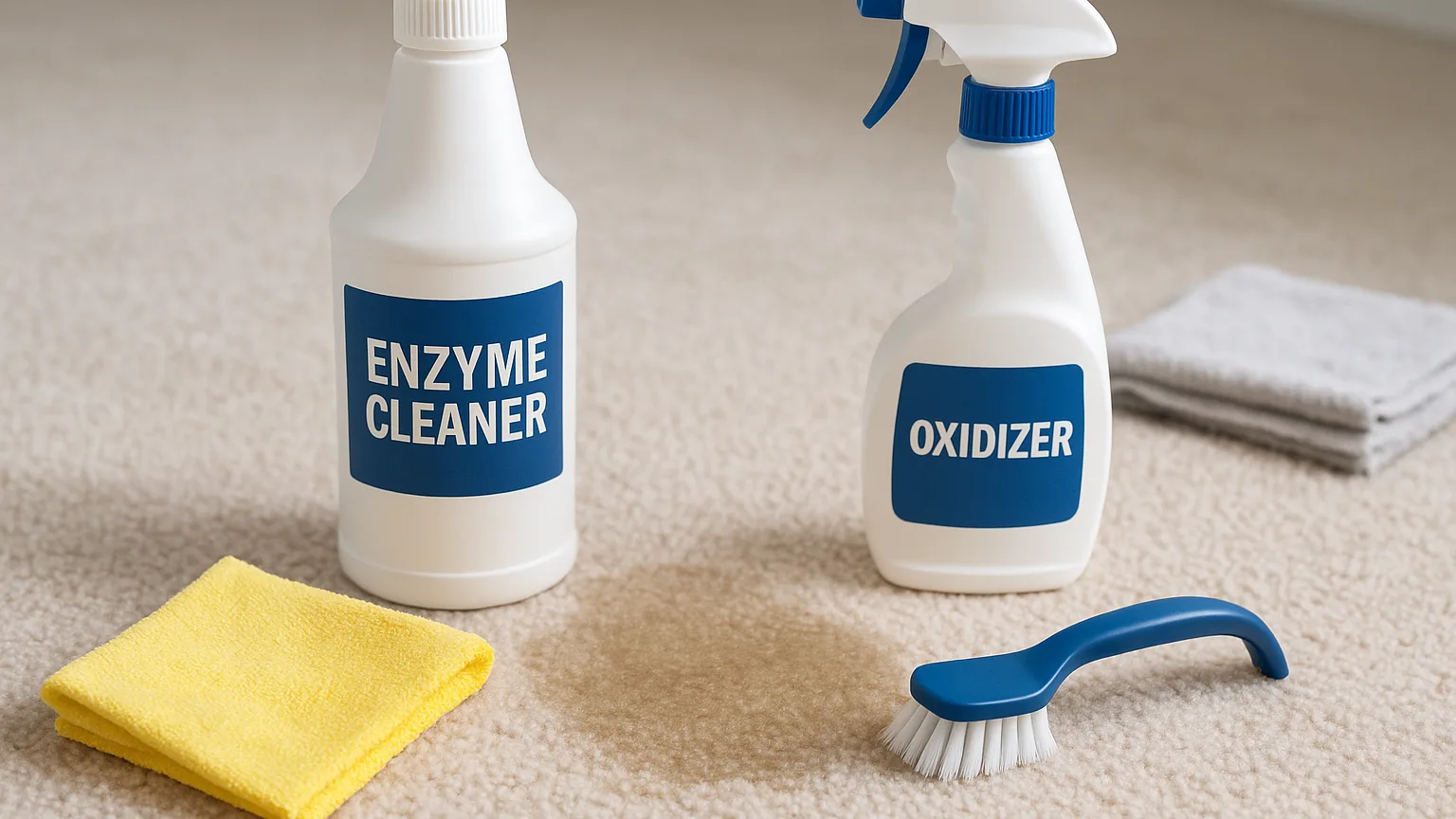
Food stains need enzymes, color stains need oxidizers, and mixed stains such as red wine need both, used in the right order. Pick the wrong tool, use hot water, or wait too long in dry Arizona heat, and the stain can bond to your carpet for good.
The good news is that you do not need a closet full of products. Keep one enzyme cleaner and one gentle oxidizer on hand, blot fast, test first, and always rinse. When a stain is old, large, or on wool, a professional can read the fiber and the soil and choose the safest path. Quick thinking in the first ten minutes is what saves your carpet.